
Compressed Air Filter Selection Guide
Compressed Air Filter Selection Guide: Particulate, Coalescing and Activated Carbon Filters
Learn how to choose compressed air line filters by contaminant type, filter grade, flow rate, pressure, oil content and downstream equipment protection.
Written by: Michael.Keng
Technical review: Engineer Wu
Topic: Compressed Air Filter Selection Guide
Quick Answer
Featured snippet answer:
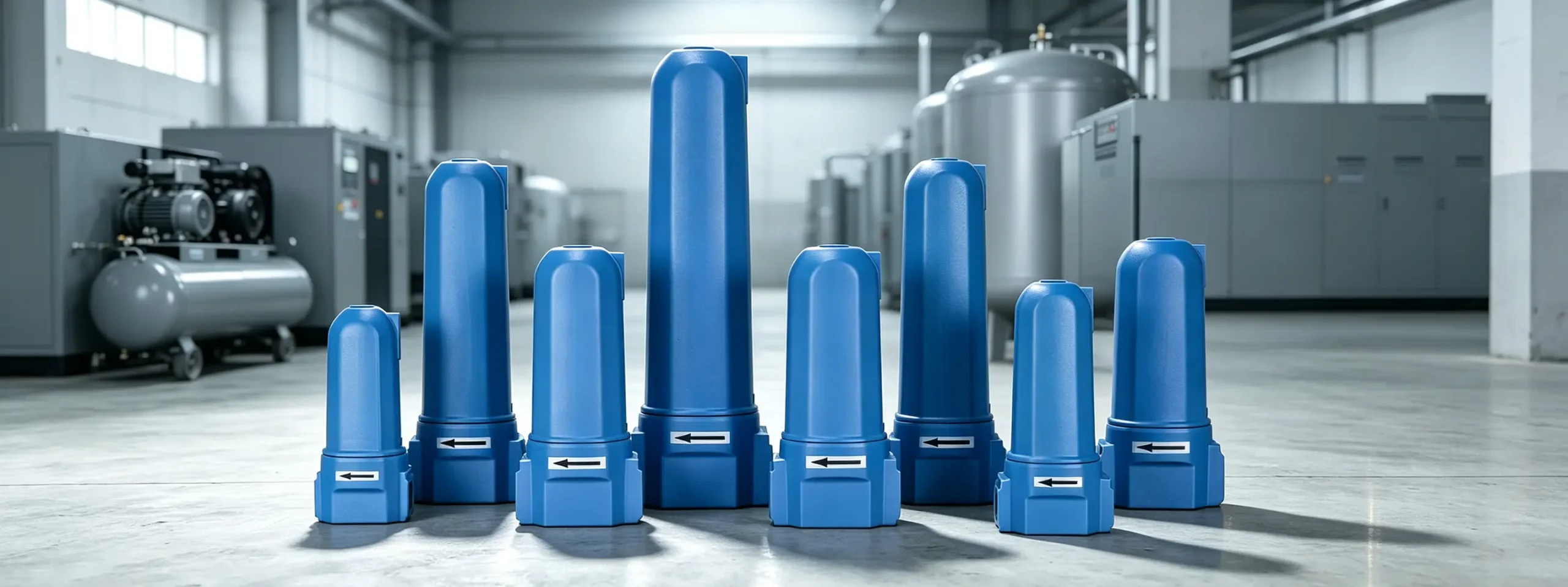
Choose a compressed air filter by the contaminant you need to remove first. Use particulate filters for solid particles, coalescing filters for liquid water mist and oil aerosols, and activated carbon filters for oil vapor and odor control. Then check filter grade, flow rate, working pressure, pressure drop, oil content and downstream equipment requirements.
A filter is not selected by micron rating alone. The same nominal grade can behave differently when flow rate, pressure, inlet contamination, drainage, housing size and upstream filtration change.
Why Compressed Air Filters Matter
Compressed air can carry more than air. It may carry pipe scale, rust, desiccant dust, condensed water, oil aerosols, oil vapor and other contamination from the compressor, piping and treatment system.
If those contaminants reach the wrong point, the result may be wet dryers, clogged valves, sticky pneumatic tools, paint defects, laser cutting problems, packaging issues or unplanned maintenance. A compressed air filter is used to control that risk before the air reaches dryers, tools and production equipment.
This guide focuses on compressed air line filters and compressed air treatment filters. It does not cover compressor intake filters, compressor oil filters, air/oil separators or filter regulators.
Start With The Contaminant
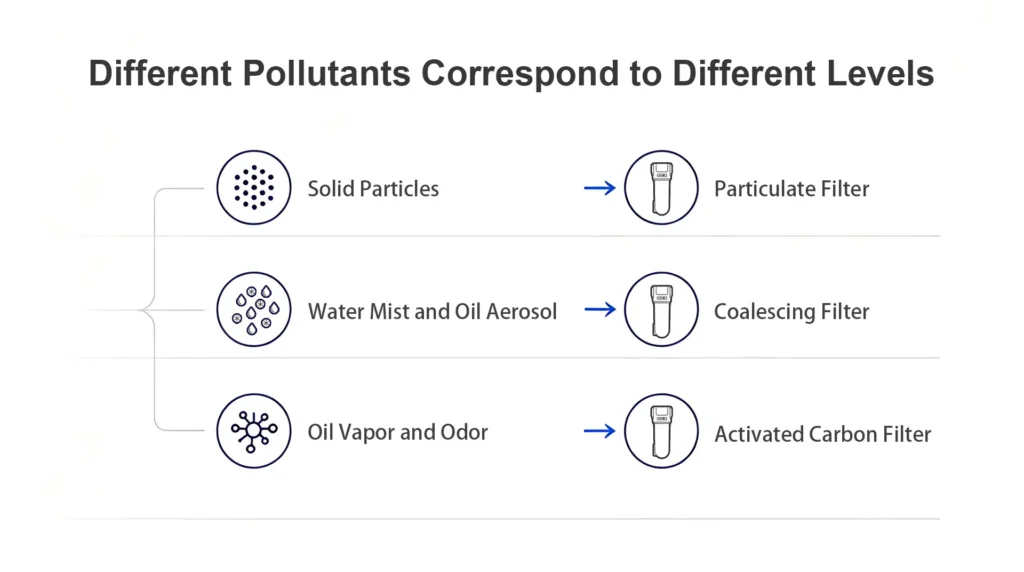
The practical first question is not “Which filter grade is best?” It is “What are we trying to remove?”
Filter Type
Main Purpose
Typical Use
Particulate filter
Removes solid particles such as dust, rust, pipe scale and desiccant dust
Protecting downstream valves, tools, dryers and final filters
Coalescing filter
Removes liquid water mist, oil aerosol and some fine particles
Protecting dryers, pneumatic components and process equipment from liquid contamination
Activated carbon or adsorption filter
Helps reduce oil vapor, odor and some hydrocarbon vapor
Used after effective liquid oil and particle removal when vapor control is required
No single filter type is automatically the best. Each one has a job. A good system usually uses the correct sequence instead of forcing one filter to solve every contamination problem.
Activated carbon filtration is a good example. It should not be treated as the first defense against bulk liquid oil or water. If liquid contamination reaches the activated carbon stage, the filter life and performance can be affected. In many systems, particle and coalescing filtration must protect the adsorption stage.
Filter Grade Is Only One Input
Buyers often compare compressed air filters by micron rating. That is useful, but incomplete.
A smaller micron number does not automatically mean a better choice for every system. Filter grade must be checked together with:
- contaminant type;
- rated flow rate;
- actual working pressure;
- pressure drop;
- housing size;
- upstream and downstream filter stages;
- target air quality at the point of use.
For example, a fine filter installed too early in a dirty system may load quickly and create higher pressure drop. A filter selected only by grade may also be undersized if the real air demand is higher than the rated flow.
The better approach is to define the target air quality and contamination source first, then select the filter type, grade and installation position.
Flow Rate And Working Pressure Change The Real Selection
Filter selection must be based on actual operating conditions, not only the compressor nameplate.
Flow rate affects how much air and contamination must pass through the filter. If the actual flow is near or above the filter’s rated capacity, pressure drop may increase and filter element loading may become faster.
Working pressure also matters. The same standard flow can create different actual air velocities at different pressures. A filter that looks large enough at one pressure may need to be checked again when the system runs at a lower pressure.
For a serious quotation, provide:
- maximum and normal air flow;
- working pressure range;
- inlet temperature;
- pipe size or connection size;
- installation position;
- compressor type and oil carryover risk;
- target contaminant or air quality requirement.
Without these details, filter selection is only a rough match.
Oil Content And Drainage Cannot Be Ignored
Oil contamination appears in different forms. Liquid oil aerosol is not the same as oil vapor. A coalescing filter is commonly used for liquid aerosols, while activated carbon is used when vapor or odor control is required after upstream protection.
Oil content also affects maintenance. Higher oil mist load, poor drainage or heavy water carryover can increase filter element loading and create more pressure drop. That does not mean every system needs the finest filter. It means the filter train should match the compressor type, upstream dryer, drainage condition and point-of-use requirement.
If the system uses an oil-lubricated compressor, the filtration plan should be checked more carefully before moisture-sensitive or process-sensitive equipment.
How Filters Protect Dryers, Tools And Production Equipment
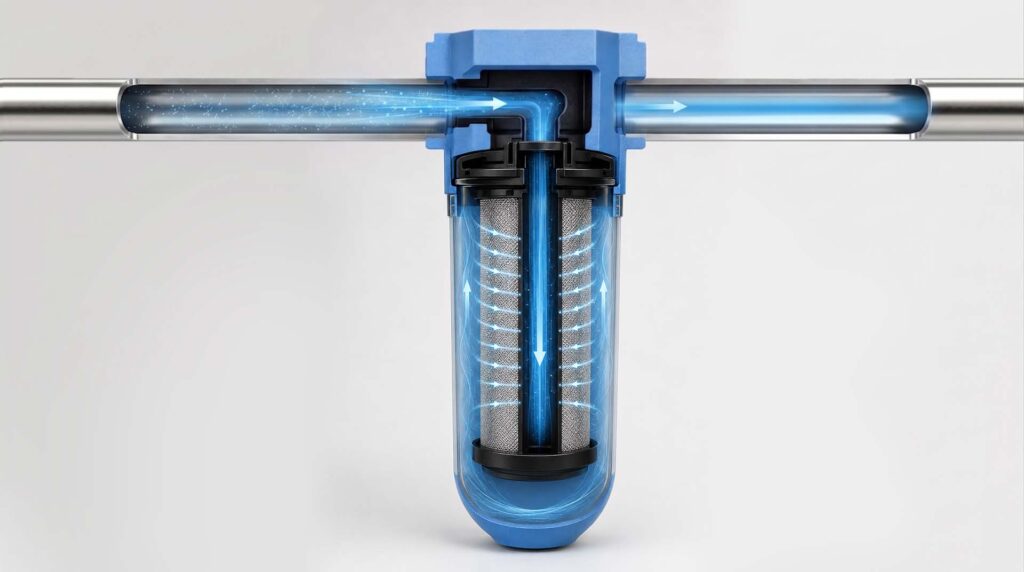
Compressed air filters are often installed to protect equipment that is more expensive or more sensitive than the filter itself.
For dryers, upstream liquid water, oil aerosol and particles can contaminate heat exchangers, drains, desiccant beds or downstream air quality. Different dryer types may need different pre-filter and after-filter arrangements.
For pneumatic tools and valves, water and particles can cause sticking, wear, corrosion and clogging. Oil and water contamination may also interfere with seals and internal lubrication conditions.
For production equipment, the risk depends on the process. A paint shop may see surface defects. Laser cutting may be sensitive to moisture and particles near the cutting air path. Food packaging may need contamination risk review at the point of use. CNC and machining shops may focus on valves, fixtures and tool reliability.
The key is not to use the same filter grade everywhere. The key is to match the filter train to the actual point-of-use risk.
The Air Compressor Filters Confusion
The phrase air compressor filters can mean different things. Some buyers use it to mean compressor intake filters, oil filters or air/oil separators inside the compressor package. Those are not the same as compressed air line filters.
This article is about compressed air filters installed in the air treatment line after compression. These filters help treat compressed air before it reaches dryers, tools, valves and production equipment.
If you need replacement filter elements for a line filter, provide the original brand, model, dimensions, end cap style, seal structure, filter grade, installation position and photos. Do not select replacement elements by appearance alone.
Common Mistakes
Do not choose only by micron rating. A filter grade without flow, pressure and contaminant context is incomplete.
Do not install activated carbon as the first filter in a dirty or wet system. It usually needs upstream protection.
Do not ignore pressure drop. A blocked or undersized filter can affect system pressure and operating cost.
Do not assume every industry needs the same filter grade. Painting, food packaging, laser cutting and general pneumatic tools have different risks.
Do not ask for a final filter recommendation without flow rate, pressure, contamination type and installation position.
What To Send For A Filter Recommendation
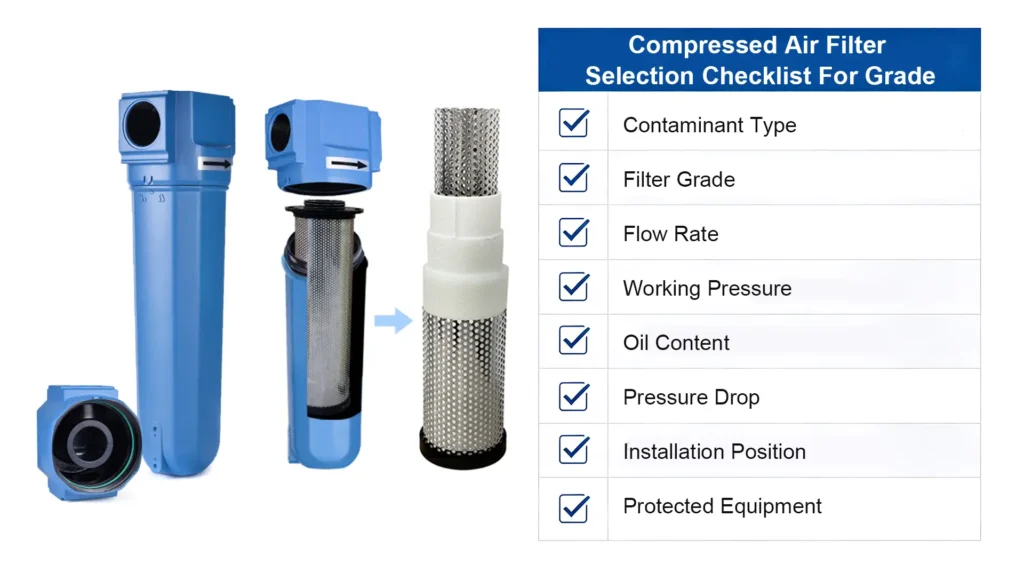
To get a useful recommendation, send:
- application or equipment being protected;
- target contaminant or air quality requirement;
- flow rate;
- working pressure;
- inlet temperature;
- oil content concern or compressor type;
- pipe size and connection;
- installation position;
- existing filter model or photos;
- whether you need complete filters or replacement elements.
With these details, a supplier can check the suitable compressed air line filter type, filter grade and replacement element options.
Frequently Asked Questions
What is the difference between particulate, coalescing and activated carbon filters?
Particulate filters mainly remove solid particles. Coalescing filters mainly remove liquid water mist and oil aerosol. Activated carbon filters are used for oil vapor, odor and some vapor-phase contamination after upstream protection.
Is a smaller micron rating always better?
No. A smaller micron rating is not automatically better. It must be matched with flow rate, pressure drop, contaminant type, upstream filtration and target air quality.
Why does pressure drop matter?
Pressure drop can reduce usable system pressure and may increase operating cost. High pressure drop can come from undersizing, high flow, heavy contamination or a loaded filter element.
Can one filter protect both a dryer and production equipment?
Sometimes one filter stage helps, but many systems need more than one stage. Dryer protection, vapor control and final point-of-use protection may require different filter types.
Do you sell air compressor intake filters?
This article covers compressed air line filters and replacement elements used in air treatment systems. It does not cover compressor intake filters, oil filters, oil separators or filter regulators.
Conclusion
Compressed air filter selection starts with the contamination problem. Define whether you need particle removal, liquid aerosol removal or vapor control. Then check filter grade, flow rate, working pressure, pressure drop, oil content and the equipment being protected.
Send us your application, flow rate, working pressure, inlet conditions, oil content or compressor type, and current filter model or photos. We can help check the suitable compressed air line filter type, filter grade and replacement element options.
Need Help Selecting the Right Air Dryer?
Send us your air flow, pressure, inlet temperature, ambient temperature, and dew point requirement. SUNWIN will help recommend a suitable refrigerated air dryer for your compressed air system.